
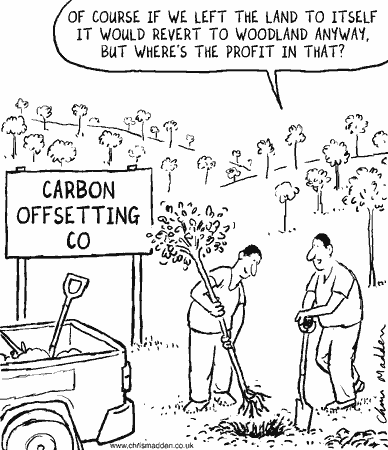
Carbon Offsetting, what’s it really about?
Off the back of taking part in CheatNeutral’s spoof chat show ‘Going Neutral’ at the Science Museum, this feels like the perfect time to take a look at the concept of carbon offsetting, the most recognised example of which is the planting of trees to...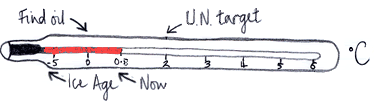
The climate science translation guide
We are all familiar with the concept of climate change, and the need for reduced carbon emissions, but really getting a handle on the scale of the problem can be difficult, thanks to all the confusing terminology.
I looked all over the web for a straightforward comprehensive explanation of terms like Global Warming Potential (GWP) and the different meanings of CO2equivalent but I couldn’t find it, so eventually I decided to spend some of my time (and the time of many helpful friends and colleagues) on creating one.

TEQs (downstream) or Cap and Dividend (upstream)?
In the climate policy community there is a growing debate between advocates of ‘upstream’ and ‘downstream’ carbon caps (dams?). The terms draw an analogy between the flow of water in a stream and the flow of energy through an economy. ‘Upstream’ advocates want to regulate the few dozen fuel and energy companies that bring carbon into the economy, arguing that this is cheaper and simpler than addressing the behaviour of tens of millions of ‘downstream’ consumers.
At first glance this seems a convincing argument, but there is one important regard in which an upstream scheme fails — it does not engage the general populace in the changes required.
Recent Comments